One-tap combos
Meal deals priced and stock-deducted as a single item, not five separate ones.
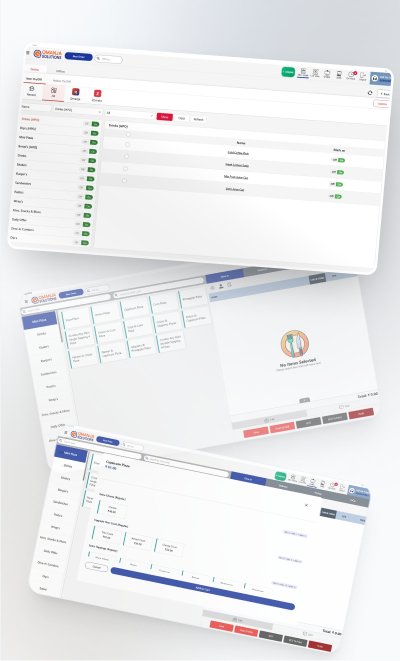
A fast food counter is judged on how many orders it clears an hour, so a fast food billing system has one job: get the bill out and the ticket to the kitchen in the fewest possible taps. Qmanja POS is that system for quick service restaurants (QSR), burger and pizza outlets, momo and roll counters and food-court kiosks: combos priced in one tap, token numbers issued automatically, takeaway and delivery sharing a single kitchen queue, and a billing screen that keeps working when the connection does not.

Meal deals priced and stock-deducted as a single item, not five separate ones.
Issued automatically on the bill and ready to push to a counter display.
Takeaway, delivery, kiosk and dine-in prioritised together instead of competing.
The till keeps clearing orders through a network drop and syncs afterwards.
Orders per hour against roster cost, so staffing matches the actual rush.
One menu pushed to every branch, each with its own stock and day-end.
Qmanja POS is a cloud system, so you get remote access, automatic updates and multi-outlet reporting. But billing does not depend on the cloud: transactions are stored on the device and sync the moment the connection returns. A broadband problem slows your reports, never your counter.
At fast food volumes an outage costs orders by the minute. The till keeps clearing the queue and reconciles itself once the line is back.
| Function | Online | Internet down |
|---|---|---|
| Billing & printing a bill | Yes | Keeps working |
| KOT to the kitchen | Yes | Keeps working |
| Stock deduction | Yes | Queued, applied on sync |
| Live dashboard & reports | Yes | Resumes after sync |
| Multi-outlet consolidation | Yes | Resumes after sync |
| Online / aggregator orders | Yes | Needs connectivity |
A fast food billing system is POS software tuned for order throughput rather than table service. It prices combo meals as single items, issues token numbers, sends every order to one prioritised kitchen queue whether it came from the counter, a delivery app or a kiosk, prints a GST bill, and keeps billing when the internet drops.
The tax, reporting and stock engine is the same. The difference is the counter screen: a fast food outlet needs the fewest taps per order, combos and upgrades in one tap, token numbers and a queue display, while a dine-in restaurant needs tables, courses and split bills. Qmanja POS ships both layouts, so a brand with a QSR counter and a dine-in outlet runs one system.
Yes. A combo is configured as one item with its own price and its own recipe-level stock deduction, so it rings up in a single tap and still deducts every component correctly.
Yes. Token numbers are generated on the bill automatically and can be shown on a counter display so staff are not calling names across a queue.
Yes. A shared menu and pricing structure is pushed to every branch while each keeps its own stock, roster and day-end, with consolidated reporting from one login.
The same POS, configured for how each kind of kitchen actually works.
The full feature list: tables, courses, split bills and station-routed KOTs.
Built for Delivery-First Kitchens
Where the Queue Is the Constraint
Weight Billing, Pre-Orders and Festival Peaks
Many Counters, One Settlement
Billing that keeps running when the internet does not.
Live sales and multi-outlet reporting from one cloud dashboard.
Item-level GST, split bills and a monthly tax summary.
Smart POS System Built for Restaurants
Manage orders, billing, KOT, inventory, and reports seamlessly
all in one powerful restaurant POS system.
 Dine-In, In-Car, Delivery & Pickup
 Smart Billing & Tax
 KOT & Kitchen Workflow
 Inventory & Reports
 Fast Order Processing