"Free restaurant billing software" is one of the most searched phrases in Indian restaurant tech, and the answer is not "there is no such thing". There is, in four forms, and for some outlets one of them is the right choice. The useful question is what each one actually costs you, because none of them costs nothing.
The four kinds of free
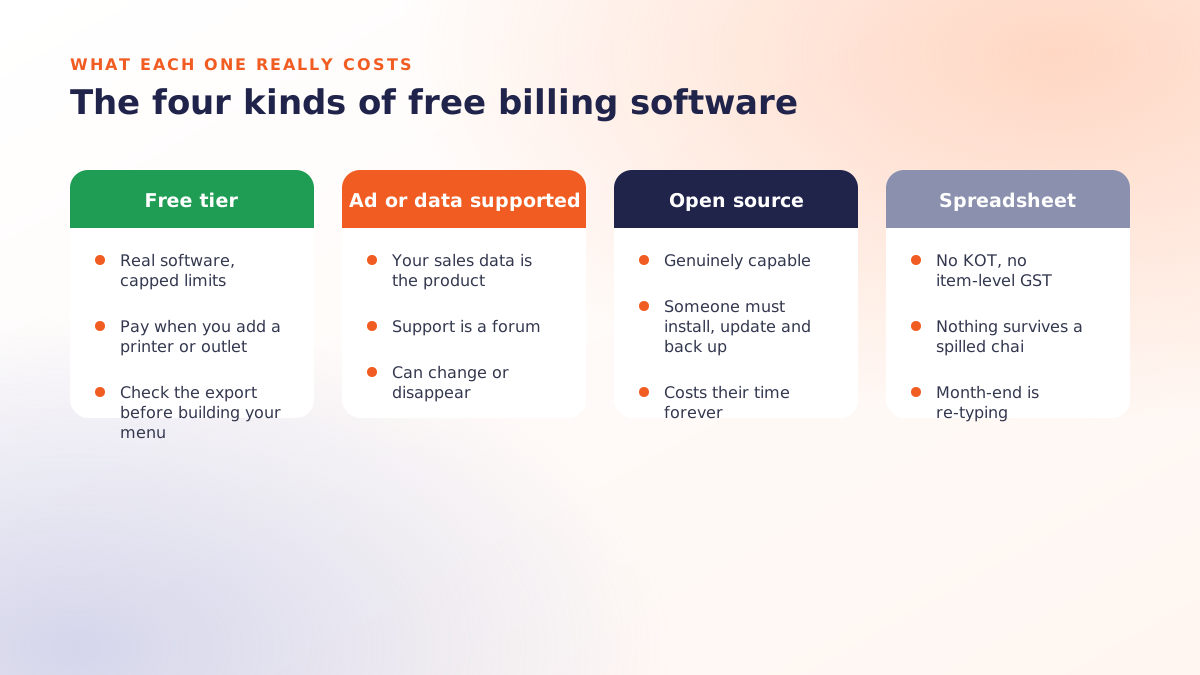
1. The free tier of a paid product
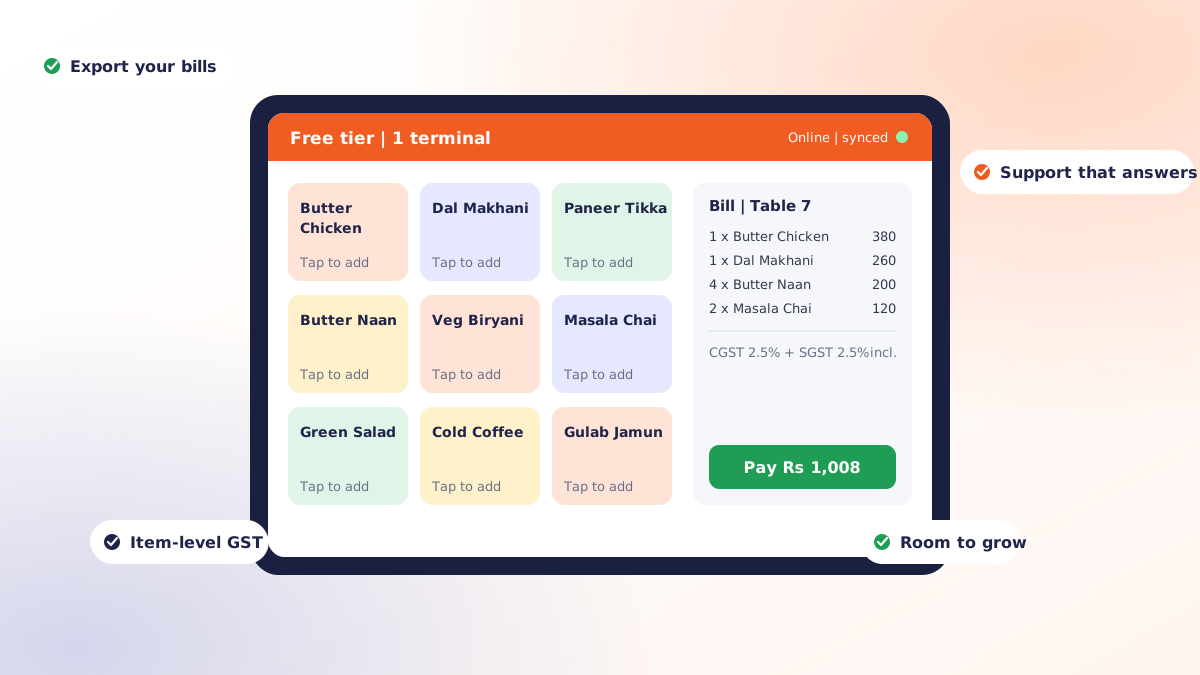
One outlet, one terminal, a capped number of bills or items, basic reports. This is a sales funnel and there is nothing wrong with that: you get real software, and the vendor gets a customer when you grow. What it costs: the day you need a second printer, a kitchen station, an aggregator order or a real tax summary, you pay. Read the limits before you build your menu into it.
2. Ad-supported or data-supported apps
Free to use, paid for by advertising, by selling you hardware and payments at a margin, or by your sales data. What it costs: your bill data is the product, support is a forum, and the app can change or disappear. Check whether you can export your bills; if you cannot, you do not own your own records.
3. Open-source software you host yourself
Genuinely free and genuinely capable, if someone on your team can install it, keep it updated, set up printers, take backups and fix it at 9 pm on a Saturday. What it costs: that person's time, forever. For a restaurant group with an IT person it can be a fine choice. For a single outlet it is usually the most expensive option on this list.
4. The spreadsheet and the duplicate book
Free, familiar and how a large share of Indian restaurants still bill. What it costs: no KOT, no item-level GST, no record that survives a spilled chai, and an owner who spends the last day of every month re-typing. It is also the setup in which the KOT-without-bill problem is invisible.
What free usually leaves out
| Need | Typical free tier | Why it matters |
|---|---|---|
| Item-level GST with HSN and CGST/SGST split | Often bill-level only | Compliance; see the GST billing guide |
| KOT routing by station | Rarely | Kitchen speed and the no-bill problem |
| Offline billing | Sometimes, with sync limits | Bills during a broadband cut |
| Aggregator orders in the same queue | Rarely | Reconciliation with platform statements |
| Void and discount logs with names | Rarely | Where leakage shows up first |
| Support that answers the phone | Forum or email | Saturday night |
| Export of all bills and menu | Varies; check | Your GST evidence and your exit |
When free is genuinely fine
- A single small outlet doing under roughly fifty bills a day.
- One counter printer, a kitchen that can read the same slip, no separate stations.
- No aggregator orders, or so few that reconciling by hand is not painful.
- An owner who does the GST filing personally and does not mind an evening a month.
- A product that exports your bills and menu, and a monthly export you actually take.
If that is you, use the free tier, keep the exports, and revisit when the queue starts forming. Nothing about a paid billing system helps a restaurant that does not yet have the volume to need it.
When it stops being fine
The second printer. The first Zomato order. The first time a cashier "adjusts" a bill and there is no log. The first evening the internet goes and the billing app shows a spinner. The first GST notice. Each of these is the point at which the free product starts costing more per month than a paid one, only the bill arrives as lost orders and lost evenings instead of an invoice.
What paid should get you instead
Not more features: fewer problems. Item-level GST that prints correctly, KOTs that reach every station, billing that survives an outage, reports that reconcile, support that answers at 11 pm, and a team that comes to the outlet when a printer dies. The full list is in what restaurant billing software should do, and what it typically costs is in restaurant billing software price in India.
Where Qmanja fits
Qmanja's restaurant billing software is not free, and it is priced per outlet rather than per bill so that growth does not change the arithmetic. What you get for it is the list above, with on-site setup in Chandigarh, Mohali and Panchkula and 24x7 support everywhere. The demo, at least, is free: book one with your own menu and decide on the numbers.
 Dine-In, In-Car, Delivery & Pickup
 Smart Billing & Tax
 KOT & Kitchen Workflow
 Inventory & Reports
 Fast Order Processing